 MIA Research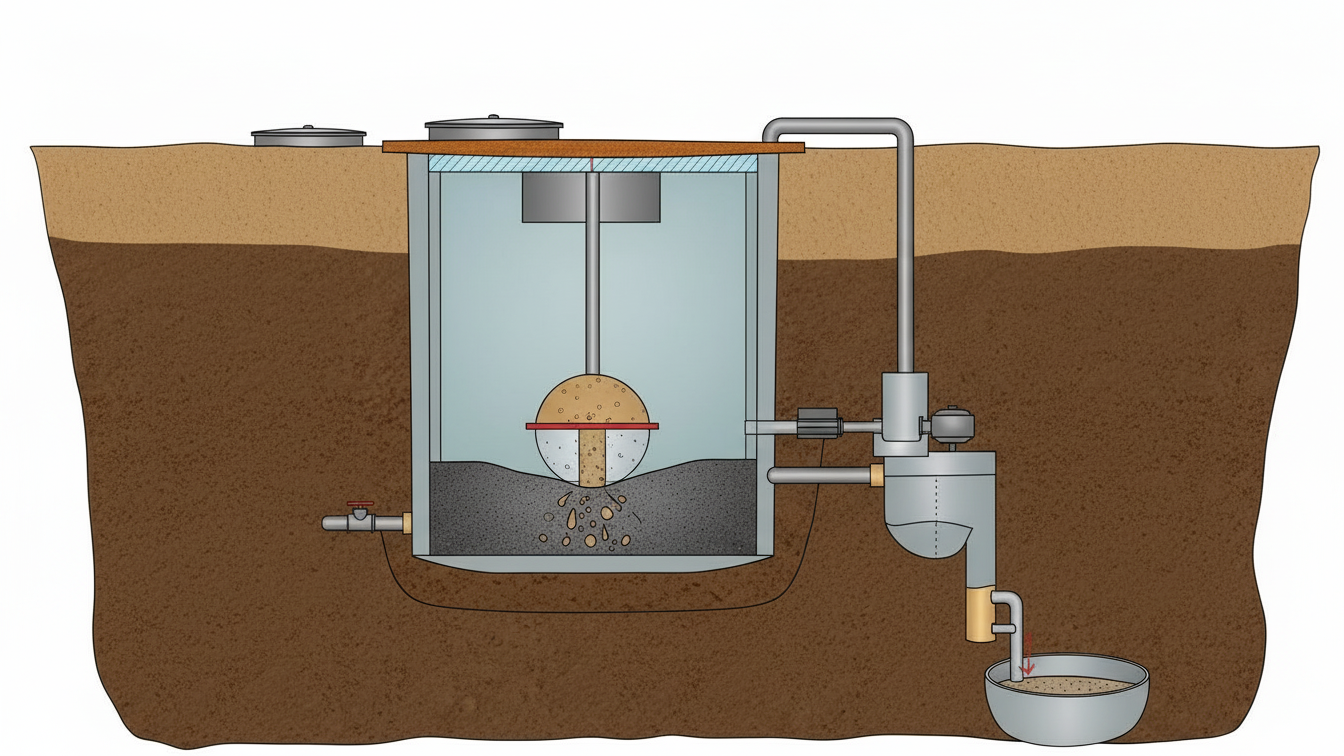
This manual provides complete construction specifications for two bio-synthetic food production systems. Together, they convert locally available waste materials into nutritious food, permanently ending dependence on external supply chains. No industrial materials required. No ongoing costs. Self-replicating through knowledge transfer.
Module 1: The Loaf Engine
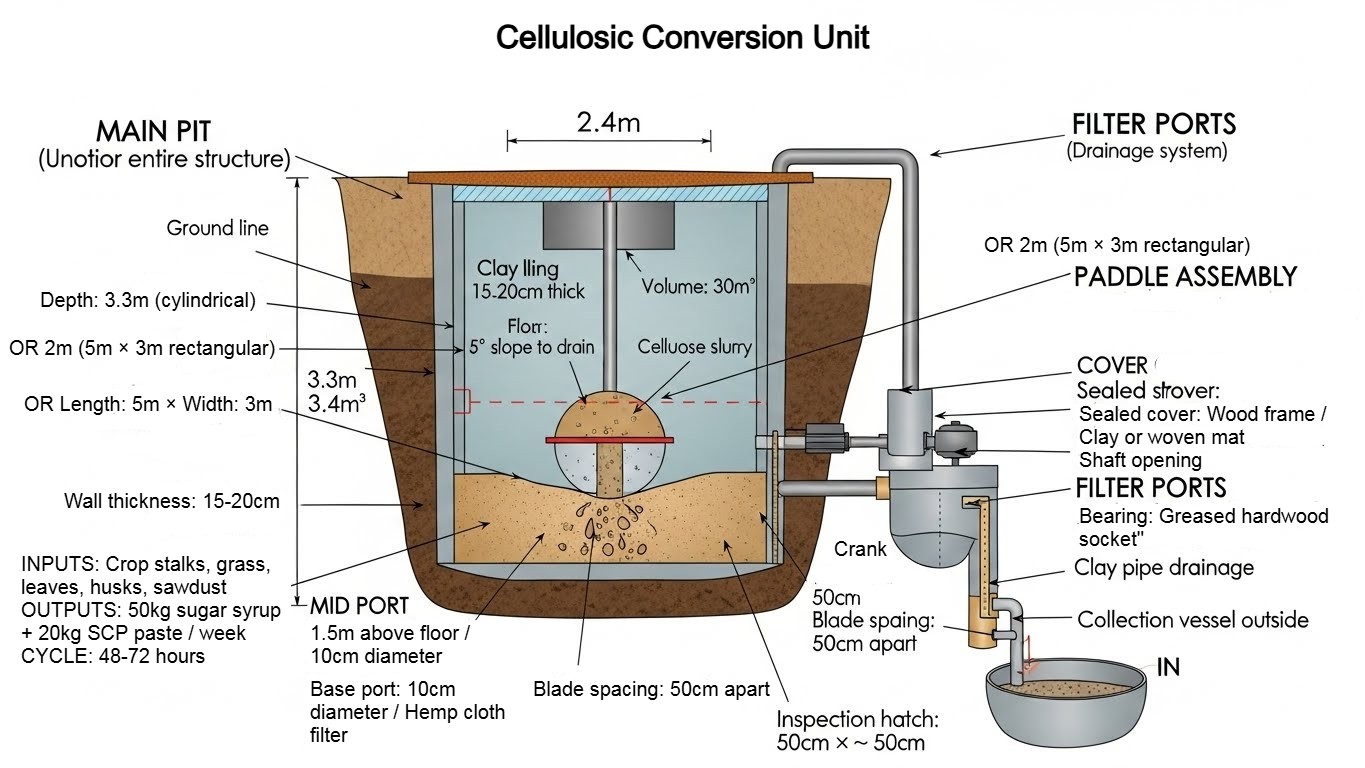
The Loaf Engine is a sealed underground vessel where microorganisms break down plant fiber into digestible food. It acts as a "stomach outside the body" that digests what humans cannot: stalks, husks, and grass. Site selection requires elevated ground away from water sources, where a 30 cubic meter pit is excavated and lined with a compacted clay-resin mixture to maintain anaerobic stability.
Module 2: The Fish Reactor
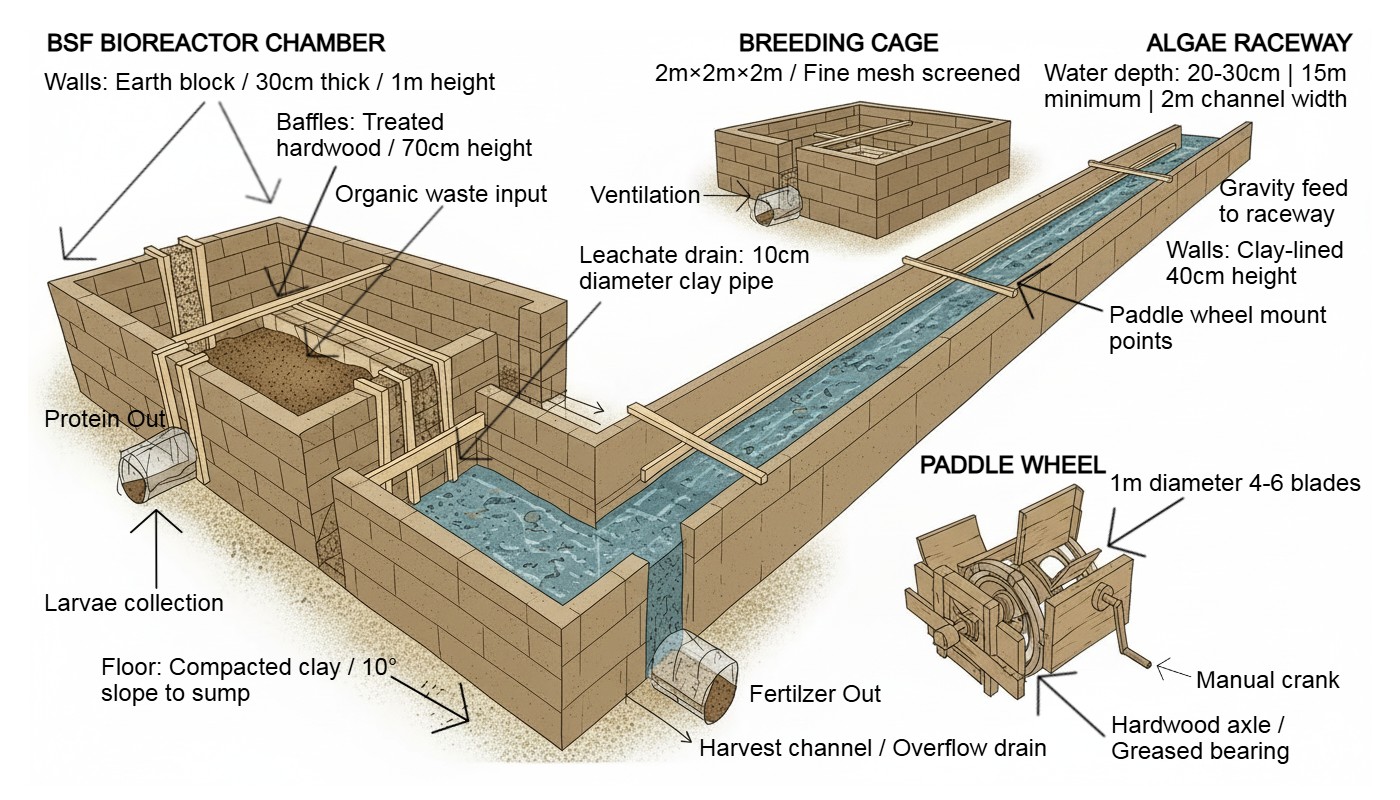
The Fish Reactor is a two-part system designed for high-efficiency waste-to-protein conversion. Organic refuse is fed into the Black Soldier Fly (BSF) chamber, while the nutrient-rich leachate is gravity-fed into an Algae Raceway. This creates a closed-loop system where waste becomes complete protein biomass and liquid bio-fertilizer for enhanced crop production.
"These systems are thermodynamically inevitable. They work because physics works. They persist because biology persists. The miracle is in the math."
System Integration
Once established, these modules reinforce each other: residual fiber from the Loaf Engine feeds the Fish Reactor, while bio-fertilizer from the Raceway enhances the crops that provide the next cycle's cellulose. For a village of 100 families, this provides an additional 730 kcal/day per person and 66g of protein per week, supplementing existing sources to permanently prevent malnutrition.
Ask ugly questions. Find beautiful answers.